Check the specification before bidding
Ask for the VIN early. Review the model, variant and option codes, and compare them with the equipment the seller describes.

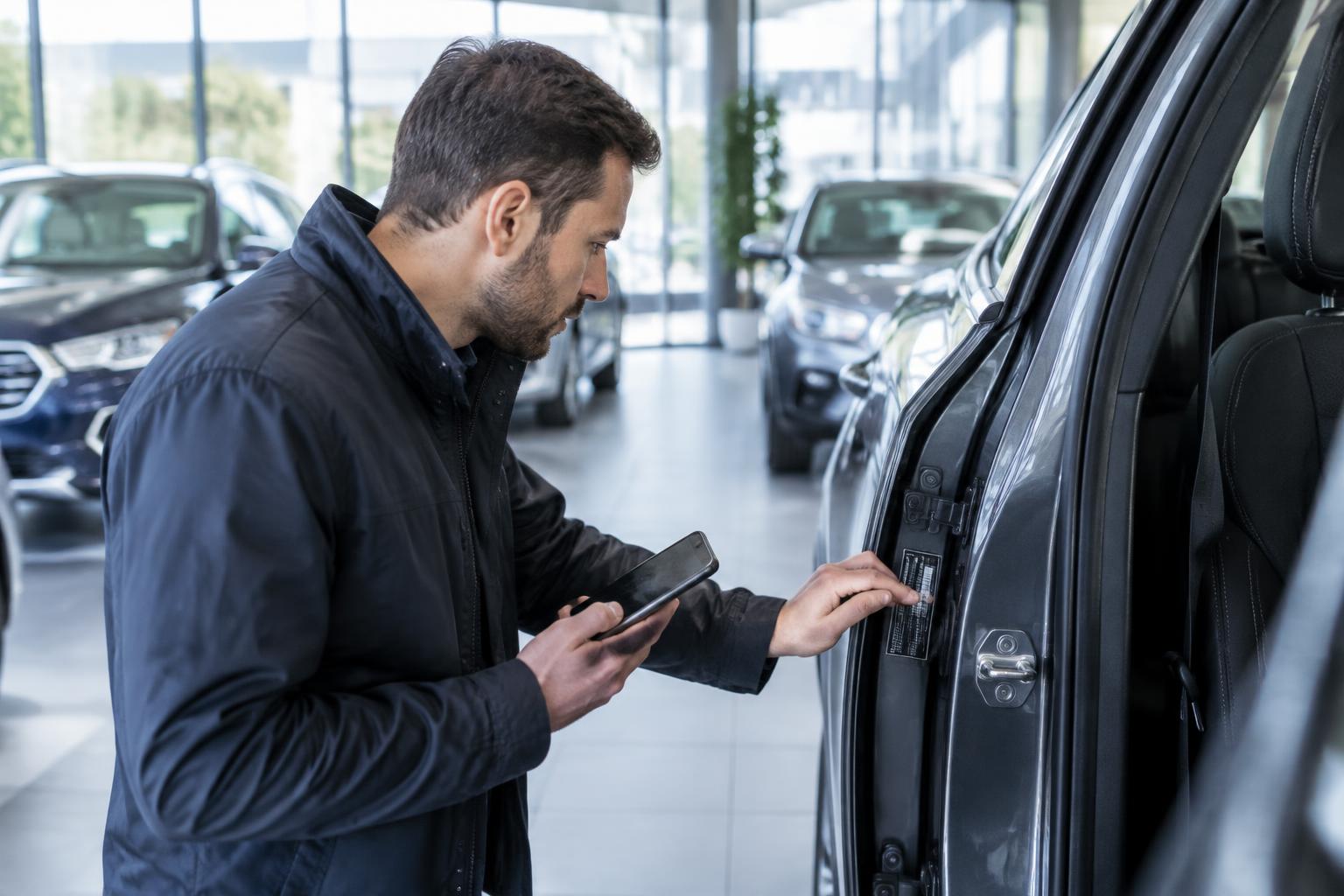
Look up the vehicle’s VIN and compare the available factory data with the seller’s listing. Use the model, drivetrain and original equipment list as part of your pre-purchase checks.
Vehicle buyers and brokers
VINdata.io
Ask for the VIN early. Review the model, variant and option codes, and compare them with the equipment the seller describes.
Review the listing alongside the original equipment list. Note differences and questions for the seller to clarify.
Start with the original equipment list when writing a new listing. Add your own checks of the vehicle’s current equipment rather than copying the previous listing.
Refer to option codes and descriptions when a customer asks about a particular feature. Distinguish what the factory data records from what you have checked on the vehicle yourself.
Save factory data with the purchase documents. You can then see which information was available when you assessed and bought the vehicle.
With an approved API integration, your system can retrieve factory data for VINs from auctions and imported vehicles. Review the information before deciding which vehicles to buy.
Example from a saved lookup
A saved Volkswagen Passat lookup with 203 factory records. Here is a selection of the original descriptions. This is an example, not a live lookup.
Volkswagen Passat · 2016
WVWZZZ3CZGE200403
pk8bNotchback
ptr14-cylinder diesel engine 2.0 L unit 04L.A
p7mmEmission standard EU6 plus
pg1a6-speed automatic transmission or DSG note: family EDF
pka2Rear view camera system
pps4Tilting and sliding panoramic sunroof
p8t8Adaptive Cruise Control ACC "stop & go" incl. speed limiter
pzncNavigation system "Discover Pro"
p4a4Heated front and outer rear seats
pa8fHighline
pwlhLED headlamps with dynamic cornering light and LED separate daytime running light
lb7w/Tungsten Silver Metallic/Tungsten Silver Metallic
p1d0Without trailer hitch
pks0Without head-up display
p7y0Without lane change assist
pqk0Without multifunction camera
These are the factory’s original descriptions in English, not AI-generated equipment lists. The list may include technical details, duplicates and equipment the vehicle was supplied without.
“Without trailer hitch” means the factory data records the vehicle as supplied without a trailer hitch. If a trailer hitch is not mentioned at all, it is unknown. Check the vehicle’s current equipment on the vehicle itself.
AI & integrations
Test lookups on the makes and model years you buy. Review the data directly or retrieve it for your own tools.
Connect a compatible assistant such as Claude or ChatGPT to https://mcp.vindata.io/api/public/mcp with your approved API key. Use the assistant to retrieve and sort factory data for your review.
Try the MCP demoRetrieve factory data for your own system and preserve the original option codes and descriptions. Your developers build the integration. API access requires approval. Free accounts receive three successful API calls in total across keys. They do not reset and have no expiry date.
See API documentationVINdata does not provide valuations, condition reports, damage history, ownership history, service history or mileage checks. Use factory data alongside your own inspection and assessment. Not all VINs are covered, and the level of detail varies. Missing information is unknown and must not be filled in with guesses.
Start with individual lookups on the website. If you buy vehicles regularly or want to retrieve data for your own system, we can discuss API access and lookup volumes. Website and API quotas are separate.
No. You get available factory data, including the model, drivetrain and original equipment list. You assess the price yourself based on the vehicle’s condition and the market.
No. Factory data describes the vehicle’s original specification. It does not tell you about wear, damage, repairs or later modifications.
Yes. With approved API access, your own system can retrieve factory data for multiple VINs. This requires an integration and an agreement on the number of lookups you need.
No. If you have the vehicle’s 17-character VIN, you can look it up yourself. You can usually find it on the vehicle, in its documents or in the auction catalogue.
Apply for API access and test VINs from relevant makes, model years and markets. Contact support@vindata.io if the three free trial calls are not enough to assess coverage.